Practical path to mining decarbonization
Key Points
-
Why hybrid haul trucks perform best on routes with frequent braking
-
How Chilean mining pilots are achieving 15% to 20% fuel savings
-
What operators think about the quieter, smoother driving experience of hybrid trucks
Mining trucks operate around the clock, but making them more efficient doesn't have to mean replacing them.
In this episode of Power Onward, Kim talks with Molly about how Cummins and First Mode are bringing hybrid technology to some of the world's toughest mining environments. They explore why electrifying an entire mine is more complicated than it sounds, how hybrid retrofits help customers reduce fuel consumption using existing equipment, and what it takes to prove new technology in the field.
Hear how mining pilots in Chile are helping Cummins turn promising technology into a dependable solution that works for customers today.
Watch
Additional resources
-
Go beyond the episode
-
News & milestones
-
Partnership stories
Timestamps
(00:00) This is Power Onward
(01:09) Molly's journey from consulting to industrial markets
(02:19) Why mining is one of the toughest industries to power
(04:05) Balancing productivity, costs and emissions
(05:56) Why electrifying an entire mine is so challenging
(08:48) Helping miners adopt new technology with confidence
(10:02) How Cummins and First Mode came together
(14:02) Testing hybrid trucks in extreme conditions in Chile
(16:03) What operators are saying about hybrid trucks
(18:11) Finding the right mining routes for hybrid technology
(20:40) Turning early-stage technology into a dependable product
(22:11) What mining could look like in the next 15 years
Listen
Apple Podcasts | Spotify | Amazon Music
Transcript
Episode transcript
Show ID (00:03):
Welcome to Power Onward, the podcast that pulls back the curtain on the technologies, people, and partnerships shaping the future of power.
Kim (00:13):
Mining doesn't have the patience for technology that only works in theory. A single haul truck can move hundreds of tons at a time, running around the clock in some of the toughest environments on earth. So when customers look at what's next, they're looking for progress without compromise, using less fuel and reducing emissions while protecting the performance and dependability their operations rely on. There's no one size fits all solution for every mine. And that's where the story gets interesting because progress doesn't have to mean starting over. High up in the Andes Mountain, nestled in the heart of Chile, that idea is already at work. Cummins and First Mode are using hybrid electrification to build on the equipment miners already know and rely on. Today, we're exploring what it takes to move innovation from possibility to production and make it dependable at scale. I'm Kim, global brand manager here at Cummins.
Molly (01:04):
And I'm Molly, executive director of products, programs, and digital in our industrial markets business.
Kim (01:09):
Molly, it's so great to have you here. Before we get into the tech of it all, I would love for our listeners to just get to know a little bit more about you. How did you get into this role within industrial markets and what all does your role entail?
Molly (01:19):
Sure. Great question. I've been at Cummins for about seven years, which is still young in the Cummins world. I came from a consulting background doing mergers and acquisitions at Deloitte Consulting for seven years. And so when I joined Cummins, I've been in a variety of strategy, supply chain and product roles. And before I became the general manager of First Mode, which I'll talk about in a second, I was responsible for all of our decarbonization initiatives within power systems. So leading work related to hybrids, leading work related to battery energy storage across power generation and industrial markets. And when we did that, I led the acquisition effort to go buy First Mode, who's a provider of hybrid retrofit solutions, ran that business for about 18 months. I'm now responsible for products, programs, and digital for industrial markets, which is inclusive of all of our engines as well as our hybrid technologies.
Kim (02:09):
Wow. You've worn a variety of hats here at Cummins, so you have quite the collection.
Molly (02:13):
Too many hats, but yes, many hats.
Kim (02:15):
But what got you into mining?
Molly (02:18):
So it's interesting. Before Cummins, I worked at Deloitte Consulting for seven years doing mergers and acquisitions. And I had experience in about five or six different industries, industrial markets being one of them. And so when I came to Cummins, don't tell this to the on-highway guys, but I was most excited about the industrial markets. And as I got closer to mining, I started to realize, wow, this is a really challenging environment. Trucks are running 24/7. Our engines are running at peak load all of the time. Minutes of downtime count. And so you can kind of think about mining as the most challenging environment to put a technology into, but it's also the most critical to power the world. Everything that we use, every electronic that we use has copper, lithium, electricity comes from coal in most places. All of that comes from mining.
(03:09):
And so mining is really the industry that keeps the rest of the world moving. And so there was something interesting to me about the hidden behind the scenes part of it all combined with it's actually the most challenging environment to operate in that just attracted me to it. And the customers are great. They are relentless in their expectations of excellence and we just desire to achieve that expectation every day.
Kim (03:31):
You have such a great point. I totally agree because when I first was introduced to Gui Colloca, he was on season two of Power Onward, and then I eventually spoke with Gbile earlier this season. I learned that mining truly is the invisible foundation of our daily lives. So many times we hear about data centers, we hear about trucks and those things matter. But from the tablet that's sitting on my lap, the laptop at my desk, the phone in our pockets, medical devices, the possibilities are quite endless, which means that mining is always going to be very critical.
Molly (04:01):
Yes.
Kim (04:02):
So you said that the customers were relentless, right? You spent a lot of times with them. So what did you learn? What are the problems they're actually trying to solve?
Molly (04:10):
Yeah. So miners are trying to solve a couple things. So first and foremost, it's how can I pull more ore out of the ground quickly? Productivity wins all day, every day. So if you think about the economy where you work in, the more copper you can extract, the more money you can make, the more devices you can power, et cetera. And so every miner is laser focused on productivity. And depending on what's going on with any given commodity, the pressure to manage cost is then quickly followed behind that. So we're at a pretty nice point for copper prices today, but coal, for example, iron are at lower price points, which creates cost pressure for the miner. Then the miners, this is one of the highest polluting industries of the world. It actually gets a bad reputation, I think, globally. And it's not regulated like most of our other markets in the world.
(05:03):
It's not globally regulated at least. Interesting. Yeah, very interesting. So pockets of regions are regulated, but most are not. And so what that means is the miners have to manage their own emissions footprint themselves. Now, the good news about that is most mining companies are publicly traded companies. They have shareholders who have expectations for how they manage their carbon footprint. And so most of the big miners, for example, have put out 2030, 2040 and 2050 decarbonization goals that they're trying to progress against. And so they're trying to simultaneously balance, how do I produce more? How do I do it at the right cost? And how do I minimize my carbon footprint? And balancing those three things is actually a really big challenge. So for me, that was what was most interesting about mining.
Kim (05:51):
So there's a big difference between demonstrating technology that works and then deploying it into a 24/7 environment. When it comes to a mine site, where does new technology face its biggest reality check?
Molly (06:02):
Yeah, this is actually one of the biggest struggles with the decarbonization journey in mining. When we think about what it takes to actually fully electrify a mine, first of all, one of these trucks is three to four megawatts of power. So think about that as a city block of power potentially running at any particular point in time. Might be probably multiple city blocks actually. So if you think about electrifying a mine, which is kind of where the industry was headed a handful
Show ID (06:31):
Of
Molly (06:31):
Years ago, we were all in on zero carbon. We were thinking about how do we deploy full battery electric vehicles. We were even talking about fuel cells at the time, which kind of quickly dropped off. And so when you think about what it takes to electrify a mine, first is it takes an immense amount of power on any one of those vehicles. And the challenge, the practical reality is the most efficient way to deliver said power today is still burning diesel fuel. And so everything that you do beyond that is somewhat less efficient. And so when you think about fully electrifying a mine, you actually have to figure out a way to produce enough power to supply the mine and then transport it there and then be able to charge the vehicles themselves. So one of the practical headwinds I think on the decarbonization journey and specifically for battery electric vehicles is how do I actually get the right infrastructure at the right costs at the mine?
(07:24):
Depending on the miner and their operations, that could very easily be a half a billion dollar investment and require -
Kim (07:30):
That's not easy.
Molly (07:30):
That's not easy, especially if you've got this capital constrained environment that we're operating in right now, miners are trying to see how do they most effectively and efficiently deploy capital. And so for us, I think as we think about battery electrification of a mine, infrastructure becomes one of the biggest challenges and the fact that you have to actually convert an entire fleet of vehicles to be able to take advantage of those benefits. In contrast, if you think about retrofit solutions, so if you think about hybrids or for example, Cummins is developing dual fuel solutions as well, those are infrastructureless solutions. And so you can apply them to your existing install base so you can actually start to decarbonize your operations now versus wait to be able to convert an entire fleet and they don't require meaningful investment. So I can make a truck by truck choice instead of investing half a billion dollars in infrastructure combined with then converting an entire fleet, which is another large capital outlay on top of that.
Kim (08:31):
It's far more approachable.
Molly (08:33):
Far more approachable.
Kim (08:33):
It feels like you're using things that you already have and you're not engaging in high risk or unfamiliarity or just uncharted territories.You already know this truck, we're just going to retrofit it.
Molly (08:43):
Yeah. And I think what we've learned as we've started to do these pilots is mines need to trial change first. These are intense environments. These are environments and operations that are heavily focused on safety. And so anytime you introduce a change into a mining environment, it requires a large amount of change management, supervision, approvals, training for operators, training for maintainers. And so what we found is that miners are reluctant to go all in on a new technology without having tried it first. And so one of the benefits that we've seen as we've actually started operating in Chile is we get the customer and the miner familiar with how does the hybrid technology actually work, for example, what changes do you need to make to your operations? And then we kind of go from there. We get them comfortable first.
Kim (09:38):
You mentioned change management. A lot of this is, people don't really think about that. They're like, why can't you just acquire them? Okay, cool. Endless money. We'll just acquire a new fleet of these electrified haul trucks. But now we're seeing easier solutions, we're seeing proof, and I think that's what gives everyone that peace of mind knowing that they can see it before they invest in it further.
Molly (09:57):
That's right.
Kim (09:58):
So it's clear that the challenge is very clear for miners. They want to make meaningful progress without compromising their performance, productivity, and the economics of their operations in itself. So how did Cummins and First Mode come together? Tell me a little bit more about that. What else about hybrid made it such a practical path forward for us?
Molly (10:16):
So hybrids from a technology standpoint are the perfect combination of getting you some decarbonization benefit, but also total cost of ownership improvement. It's the only decarbonization technology out there right now that we can actually say that about. So battery electrification, battery electric vehicles take over a decade to pay back because of the capital expense to get in the money. When we think about how do you actually improve total cost of ownership, which is one of the things, if you remember the three things that I said that miners care about productivity, they care about costs and they care about decarbonization, I'm trying to address all three and hybrids address all three. So hybrids lower the cost of ownership and operation by reducing fuel. They address decarbonization because every percent fuel less that I burn is exactly the same amount of carbon less emitted into the air.
(11:11):
And then with our next generation of hybrids, we actually can address the productivity point as well. So one of the things that hybrids can do by adding batteries to an engine is they can help the truck go faster. And so anytime you can run a route more quickly, you're now helping the miner extract more ore out of the ground more quickly and then they're making more money. So hybrids, again, only technology, new technology, decarbonization technology out there that can do all three of those things simultaneously. So we saw that opportunity from a Cummins side a handful of years ago. We ironically were trying to develop our own hybrid solution internally when we bought First Mode. But when we bought First Mode, we saw an opportunity to bring in a faster path to market as well as a different innovation approach than how Cummins typically develops products.
(12:02):
So when we develop products, we are very rigorous in our process. We care a lot about ensuring that every I is dotted, every T is crossed because it's got a Cummins brand on it. It means dependable, reliable quality in the field. That's our brand.
Kim (12:18):
Can't compromise that.
Molly (12:19):
Can't compromise that. And so what has been interesting with First Mode is they built a brand around agility, innovation, speed, alongside a little bit of technical risk. And so they've made customers their partners and their proving grounds. So instead of testing and validating the solution for years on end within one of our facilities, we're actually partnering with our customers to trial the technology in the field so you accelerate that learning faster.
Kim (12:47):
Oh yeah. At least a couple of years saving.
Molly (12:49):
A couple of years. So for us, that was a really valuable approach and something that challenged our status quo of how we actually developed products within Cummins. So it was a nice marriage from that standpoint because we got to bring in the innovation, but then we also got to pair it with the scale and support of our global service network. And I will tell you that there is no way we would've been able to deploy two pilots into the field without the power of our Cummins distribution network. Our Cummins Chile distributor and then alongside the Komatsu Chile distributor were critical to actually getting it into the field and then to supporting it on a day-to-day basis. So it's really been the perfect blend of both. We picked the right technology, we saw an opportunity to accelerate our position and innovate more quickly and differently, and then we paired it with the support network that Cummins brings along all of its products.
Kim (13:38):
Exactly. Usually it's just win-win, but from what you said, it's like win, win, win, win. We've got total cost of ownership and operation, immediate emissions impact, which is something that it's hard to get.
Molly (13:48):
Hard to get.
Kim (13:48):
Infrastructure free deployment, which I think is a huge win. And then the operational continuity that our miners get from that.
Molly (13:54):
Exactly.
Kim (13:55):
Let's dig a little bit deeper into those pilots. So what happens when hybrid meets the realities of an active mine site, right? We have a system operating nearly 4,500 meters up in the Andes facing extreme altitude and wide temperature swings. What are we learning from that initial deployment?
Molly (14:11):
One of the coolest parts about running this technology in the most extreme environments is you get to quickly find out if your technology works or doesn't work. A fun fact about Chile, if you're sitting in the United States, maybe this is less intuitive, but it's running the exact opposite weather patterns and seasonal patterns than we do in the US. So the majority of our pilots, our two pilots that are running in Chile have been in the fall into winter. And so we've gotten to not just see altitude, but also extreme weather conditions. Our two mining customers in August were hit with about 10 feet of snow.
Show ID (14:48):
Wow.
Molly (14:49):
That literally nearly buried half of these trucks. And so trying to see what happens when batteries meet cold temperatures has been super interesting. And that was one of the use cases that we were looking to test as we started these pilots. So I think key takeaways and key learnings are first, the technology actually works and batteries still work at cold temperatures. So when it's negative 35 degrees Celsius, that is still a functioning technology. So crazy. Even after sitting under feet and feet of snow for a handful of weeks, turned back on, still operated, which is great. So it functions, but not only does it function, it performs. So both of our pilots are hitting our expectations around fuel savings. So we had originally hoped for 15 to 20% fuel savings on these particular routes and we're seeing exactly those results today.
Kim (15:37):
Wow, impressive.
Molly (15:38):
Which it's always good. You hold your breath a little bit to see when you develop a new technology, you're like, "This is what it should do." And when you're within a percent or two of the actual simulation, everyone can breathe a sigh of relief. So we're very happy and satisfied with how the technology is performing. A couple of other things we've learned, I talked about the change management point, but the feedback from the operators, which is a really important thing, is the operators love these trucks. They like it because the battery makes the pickup of the engine a little bit faster. So think about this in your passenger car. If you're driving a hybrid, you can accelerate from a stop position more quickly. Drivers really like that. It's a smoother acceleration. The hybrid kit also reduces the noise level. So what isn't intuitive unless you spend a lot of time on these trucks is there's a retard grid really close to the cab of a truck.
(16:30):
And so the operator is hearing this really high-pitched whining from the retard grid all of the time. And so when the battery is in operation, it actually reduces that pretty meaningfully. In addition to a faster driving experience, you're having a more pleasant driving experience. The operators actually fight to get the hybrid trucks at both of our -
Kim (16:47):
Why am I not surprised by that?...
Molly (16:48):
At both of our minds. So that's always a good thing. Both are operated by women, which is also really cool, selfishly. We love a woman operator. And then the last thing I'd say that we learned is retrofitting is not for the faint of heart. Oh,
Show ID (17:02):
Okay.
Molly (17:03):
So there's really positive results that come out of it, but it does take a team effort to deliver one of these things. And so I mentioned a little bit ago about how it takes the Komatsu distributor, the Cummins distributor, our factory, Komatsu factory to make one of these projects come together. And that is really true. We're tearing up a truck, we're removing the deck, we're removing an upright support, we're replacing that with a battery, with another support. So we're making pretty meaningful truck modifications and then it requires our factory team and then the Cummins distribution team to actually go commission it, make sure it runs. So the good news about that is my engineers are spending a lot of time in the field in Chile, which means they're hearing from the customer directly some of the things that they like about the product, some of the things that they don't like about the product, and they bring that back from a technology development.
(17:50):
Yes. It's really well spent engineering dollars in my opinion. So no, so it's not for the faint of heart. It's not easy, but it's well worth it, which is great.
Kim (17:59):
So proving that the tech works and performs, that's huge.
Molly (18:02):
Yes.
Kim (18:02):
We love to hear that.
Molly (18:03):
We love to hear it.
Kim (18:04):
But scaling it across customers and mine sites and other types of geography is totally different ballgame, right?
Molly (18:09):
Yes.
Kim (18:10):
So what does Cummins bring to that challenge and how does First Mode strengthen what we can deliver to our customers?
Molly (18:15):
Maybe first from a market perspective, when you think about hybrid technologies, different haul routes are more suited for hybrids than not. So our hybrid technology works by recharging the battery when there's a braking opportunity. So it's regenerative braking.
Kim (18:29):
Like my car.
Molly (18:30):
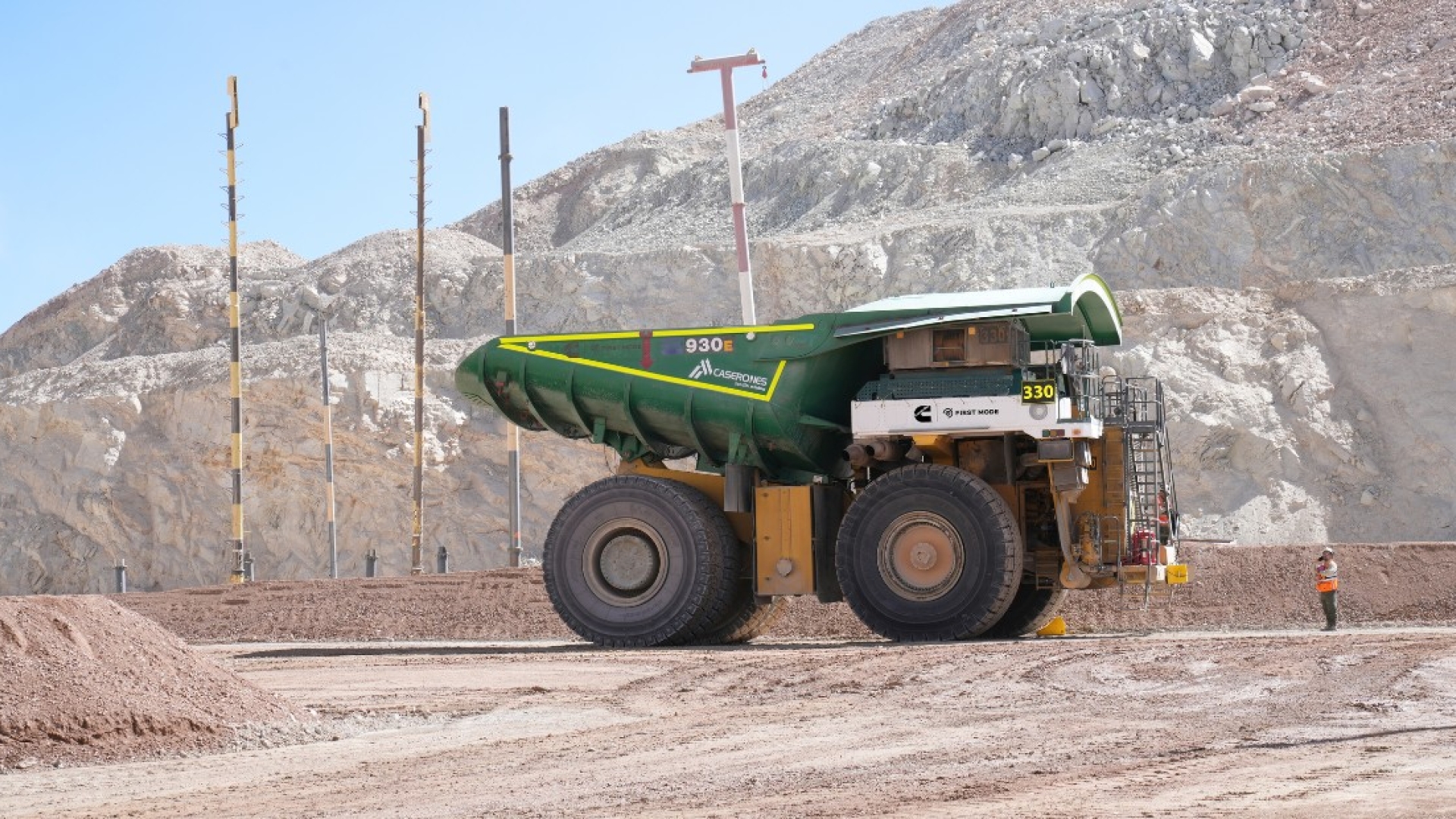
I joke sometimes that I turn dump trucks into Priuses. It is not a branded discussion Toyota, but yes, that's how I explain it to people that aren't in mining. We'll give you a picture of the dump truck for scale. It's a really big one. But not all haul routes are the same optimized for hybrids. So we really like downhill loaded hauls where there's a lot of braking or mines where there's a lot of turns, for example, followed then by routes where maybe you're hauling material out of a pit, for example. So still a lot of braking, still doing a lot of heavy work. Where hybrids are more challenged from a technoeconomic standpoint is on flatter routes where if you kind of think about it as like cruise control.
Kim (19:12):
Right. Kills my gas mileage.
Molly (19:14):
It kills your gas mileage, but if you set it at a constant speed, you don't need the extra battery. You're just kind of going one speed for the entire time. So we like routes that have a lot of variability. So when you think about what that means from a scaling perspective, one of the things that we're looking at is how do we target the right mine sites for hybrid technology? So we're starting with regions that lend themselves to deep pit mines. So whether they're downhill loaded routes or whether they're uphill loaded routes, we like mountains,
Kim (19:45):
Right? Yep. In short, that's what we say.
Molly (19:47):
In short, we like mountains. We don't like plains as much. And so we're looking at customers who have operations in mountainous regions. And thankfully there are a lot of those in the world. South America is a really great place to start. Canada has good spots. Ironically, the East Coast of Australia also has a good amount of mountains, although that's counterintuitive. Why that matters is we're trying to partner with customers that have operations that have the best business case for hybrids. So the more braking opportunities, the more fuel savings,
Kim (20:19):
Right? Yep.
Molly (20:20):
And so you want miners who are willing to pay for the technology, so you have to give them value. So we're looking at how do we expand with mining partners that have the right operations? So I think that's one. Second, then it's how do I scale an early stage technology into a product? And this is where the Cummins piece comes in with First Mode. And so we spend a lot of time talking about how do I turn hybrids into what I call a capital P product. And now with a product management hat, and I actually can say with official title that it's capital P product. But what that means is you're now taking the technology and you're making it more reliable and more durable. So we've proven that the technology works and now it's time to mature the rest of what I call the four pillars.
(21:06):
So not just technology readiness, but manufacturing readiness, operational readiness, and commercial readiness. So how do you kind of mature all of those things at once? And that's where Cummins comes in. We're really good at making products. We're really good at manufacturing them. We're really good at selling them. We're really good at supporting them in the field. And so how we are trying to think about this is where do we pull on other parts of Cummins to now support this fledgling product and turn it into a capital P product?
Kim (21:33):
It does kind of feel like the more I hear you speak about Cummins in First Mode, it feels like a match made in heaven.
Molly (21:40):
It is a good marriage.
Kim (21:41):
I like it a lot. I'm really interested in more than -
Molly (21:44):
Me too.
Kim (21:44):
Because now I'm thinking about all the ways I drive. I have a CR-V hybrid. I'll plug Honda. I'm a Honda gal, but all of this very true and super applicable in a mine site. Who knew?
Molly (21:53):
Who knew?
Kim (21:54):
As my CR-V just drives on our plains flat roads.
Molly (21:56):
Yeah. Well, you probably turn a little bit in there too.
Kim (22:00):
Yeah, I brake out roundabouts.
Molly (22:02):
Oh, that's good. You probably should.
Kim (22:03):
Safe driver. Safe driver. All right. So if this era of mining is about proving electrification in the mines, what becomes possible when we can deploy it at scale eventually? Like what could a mine site look like in the next five or 10 years?
Molly (22:17):
Yeah, that's the question. And I think the answer depends on if it's five, 10 or 15 years. Our view for mining more generally is that there's not going to be a one size fits all technology. So if you look at a mine, there are three, four different types of haul profiles in a given mine pretty easily. It's pretty standard, right? And one
Kim (22:39):
Technology
Molly (22:39):
Might work for one of those haul profiles, but not the other several. When you think about battery electric vehicles, one of the ways to distribute that energy is through trolley. And so you start to see a lot of advertisements or a lot of OEMs talking about trolley solutions. And that works for bits of the mine that are more rigid. The challenge is that many mines actually end up changing their routes fairly frequently. So a mine of the future, for example, might have a trolley and it might have a hybrid, might have a hybrid working on a trolley. It might have some alternate fuels, and it might have some battery electric haul trucks that have short routes that have the ability to either swap batteries or charge. So that's probably like the 15 year view where depending on what you're doing, what the work is to be done, you might have a different technology.
(23:31):
Hopefully it's not 10 different technologies because that becomes a really big challenge to support from a change management, parts, service, et cetera. But our view is that there's not going to be a one size fits all. So for us, hybrids becomes a really good stepping stone because it's A, simply a better diesel truck, and B, will likely be here for a very long time. And then we're making investments from a Cummins standpoint on other technologies. So we talked about alternate fuels. We were starting to do battery investigations, things of that nature to figure out how do we play in the longer term.
Kim (24:05):
So no matter what, five, 10, 15 years, one thing is for certain, we're going to meet our customers where they're at.
Molly (24:10):
Yes.
Kim (24:10):
And try to help them use some of the equipment that they've already got on site.
Molly (24:13):
Yes.
Kim (24:14):
Awesome. Well, Molly, thank you so much for joining us and showing us how bridging frontier innovation with real world dependability is powering the next era of mining.
Molly (24:22):
My pleasure. Good to be here.
Kim (24:24):
So what's the big idea for this episode? Progress doesn't have to mean starting over. For mining customers, the path forward has to work with the realities of today, the equipment already in the field, the infrastructure available, and the performance of their operations demand. First Mode pushes what's possible while Cummins helps to fortify it in the real world. Proven, strengthened, scaled, and put to work.
Show ID (24:47):
Thank you for listening to Power Onward. Your support means the world to us. If you enjoyed this episode, please don't forget to subscribe, rate, and review on your favorite podcast platform. If you want to dig deeper on what we covered today, check out the show notes for additional links or go to Cummins.com/podcast. Until next time, Power Onward. We're from Cummins, the company that's been innovating toward the future for more than a hundred years. We're no strangers to rapid change, global shifts, and economic uncertainty. We want to be your constant during the energy transition whenever, wherever, forever, power onward.
For more episodes, check out cummins.com/podcast. Want to join us on our mission towards smarter, cleaner power? Check out cummins.com/careers to explore opportunities.
Author Profiles