When dependability responds
Key Points
-
How fire trucks operate as multi-function power systems beyond transport
-
Why reliability and braking performance are critical in emergency response
-
How connected technology helps keep vehicles in service and ready
When firefighters respond, there is no room for hesitation. The equipment behind them has to perform without fail.
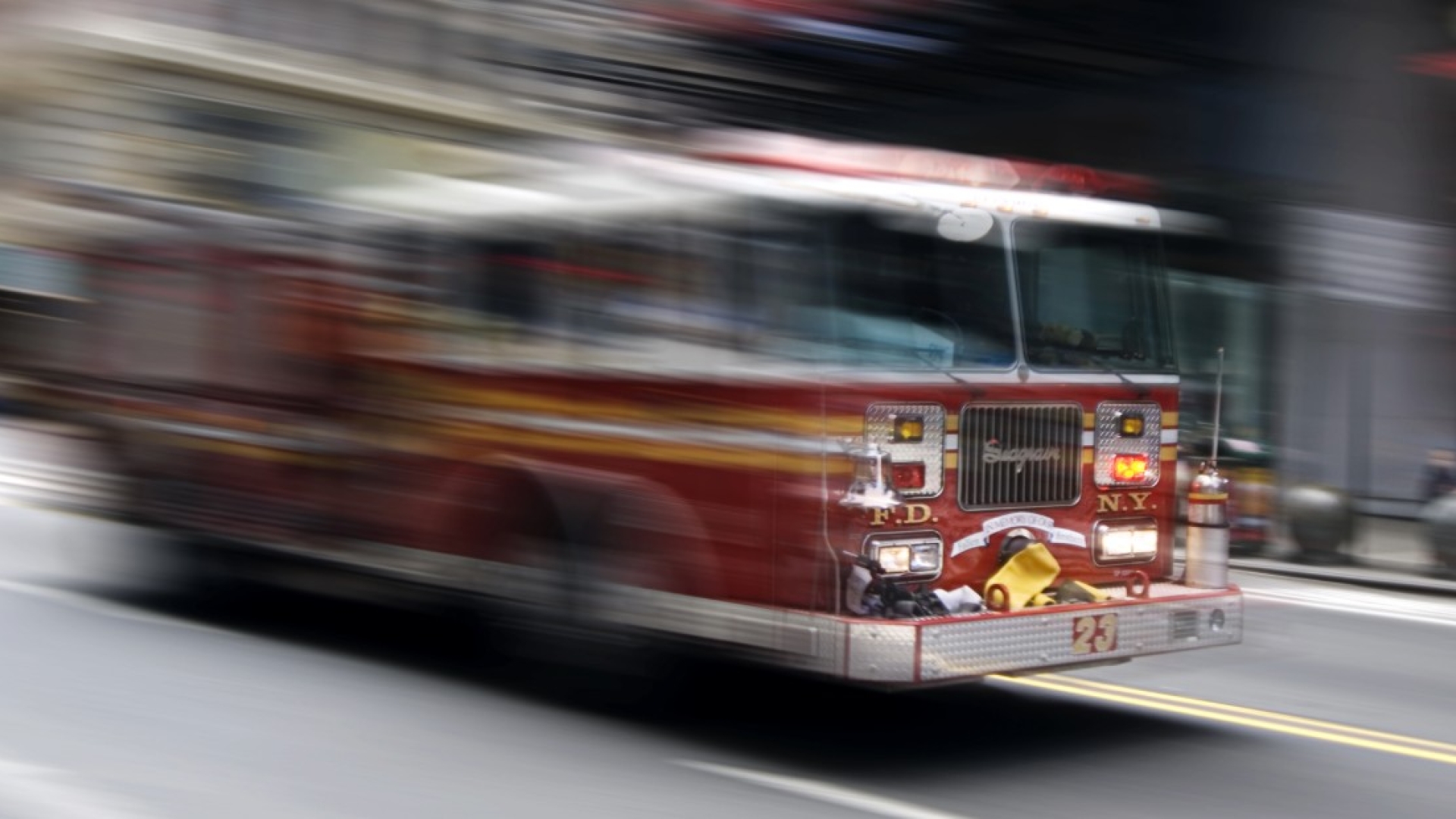
In this episode of Power Onward, Kim sits down with Chris to explore the powertrain technology behind fire and emergency vehicles. From engines designed for extreme duty cycles to braking systems that bring massive vehicles to a stop, the conversation looks at what keeps these trucks ready at all times.
Chris shares how Cummins has supported fire service for nearly a century, starting with one of the first diesel-powered fire trucks and continuing with modern innovations that improve performance, maintenance, and emissions. The discussion also highlights how these vehicles operate as mobile power systems, supporting far more than just transport.
Hear how Cummins designs for reliability, supports customers through a strong service network, and continues to improve performance through data, connectivity, and new engine platforms.
Watch
Additional resources
Timestamps
(00:00) This is Power Onward
(00:10) Why fire response depends on reliable equipment
(00:41) Cummins' history in fire service applications
(01:20) What made early diesel fire trucks a step forward
(02:00) Why fire trucks act as mobile power systems
(03:01) Understanding real-world duty cycles
(03:20) Key components that support emergency performance
(04:24) New innovations in braking and maintenance
(05:05) Meeting stricter emissions with new engine designs
(07:00) Support network and connected diagnostics
(09:00) What the future of fire apparatus looks like
Listen
Apple Podcasts | Spotify | Amazon Music
Transcript
Episode transcript
Show ID (00:03):
Welcome to Power Onward, the podcast that pulls back the current on the technologies, people, and partnerships shaping the future of power.
Kim (00:13):
When firefighters respond to a call, every second matters. And the trucks that carry them can't hesitate, stall, or fail. Across North America, a large portion of those trucks rely on Cummins engines, brakes, and drive trains to get crews where they need to go. As you can imagine, fire and rescue can be extremely demanding of its equipment. And for nearly a century, Cummins has been engineering dependable solutions designed to protect property and life.
(00:36):
Today, we're exploring the powertrain technologies firefighters trust when the stakes are absolute. Hi, I'm Kim, global brand manager here at Cummins.
Chris (00:44):
Hi, I'm Chris. I look after the engine business for fire and emergency and recreational vehicles.
Kim (00:49):
All right. So Chris, I hear that Cummins and fire service goes way back. Tell me more about Cummins, their role in maybe diesel engines and fire apparatus, and what else you can tell me about that legacy.
Chris (01:00):
Yeah, so almost a hundred years, right? Beginning with the 1937 Stutz, the first diesel powered fire truck. It still lives in Columbus, Indiana in station two. What was unique to that was 150 horsepower, 500 pound feet of torque, which by today's standards would not measure up, but then it did. It was a step up.
Kim (01:21):
It was a step up in not just the equipment, but also the overall reliability, right?
Chris (01:25)
Exactly. So that engine was actually in service from 1939 to 1974, about 35 years.
Kim (01:34):
That same engine?
Chris (01:35):
Yes. Testament to dependability and making active runs.
Kim (01:38):
Absolutely. So we're hearing reliability revolution through a Cummins diesel engine inside of that 1937 studs with more torque, better durability, and longer run times.
Chris (01:49):
Yes.
Kim (01:49):
That's a triple wins. We love to hear that. But I think that even for me and for others, when we see a fire apparatus or a firetruck, we simply see a vehicle. But there's a lot more that goes into that because recently I heard them referred to as mobile power plants. Does that have to do with that duty cycle once the engines hit the scene?
Chris (02:07):
So it can be central to the whole operation. So they don't just go to pump water. They have a lot of tasks. About 70% of their runs are EMS, emergency medical service. So sort of like an ambulance. Most of them are trained as paramedics. So not only that, but sometimes they need to get up high, right? So they have aerials, so platforms or ladders, so they can get to tall places, whether it's fighting fires or getting to people that need their help. They also block traffic, right? So many of us have experienced that on the interstate where you want something large in front of your rescue workers to prevent danger to those that are serving others.
Kim (02:43):
So they have a lot of jobs.
Chris (02:44):
They do.
Kim (02:45):
The firefighters in the building doing their thing, but the truck itself, the apparatus itself, is running multiple tasks simultaneously.
Chris (02:51):
Absolutely. In addition, they also with radio communications, comfort station. So this truck serves a lot of purpose. In fact, about 70% of the time, they are just idling.
Kim (03:02):
70%.
Chris (03:03):
About 70% of the time, about 25% of the time driving and about 5% pumping. So that's sort of a standard duty cycle for the truck.
Kim (03:11):
I know. I like that. I just visualize a pie chart as you were breaking that down. All right, Chris, let's get into the components of a fire apparatus. Why is each component so essential for emergency responses?
Chris (03:20):
So Cummins has worked with the fire service for many years. We've sold about 50,000 of these over the last 25 years. So we work very closely to upgrade and understand the needs of the fire service. So as an example, these engines are uniquely created for the fire service. So not only are they restricted ratings, meaning we maximize the horsepower and torque over a standard over the road truck engine. They do not D-rate for emissions related faults. There is no SCR inducement all in the name of getting the truck to the scene. But as important as getting to the scene quickly, stopping the truck is also important. So we have compression brakes that are anywhere from 350 horsepower up to 600 horsepower to slow the vehicle quickly.
Kim (04:10):
Right, because I'm sure that's a lot of equipment. The vehicle itself is quite heavy and you need to stop on a dime, so to speak.
Chris (04:16):
Right. And that's on top of the Meritor drive train, right? Which also has very strong braking.
Kim (04:22):
Are there any new innovations within the powertrain?
Chris (04:24):
There sure are. So we'll be releasing the Meritor QuikDisc systema. So not only does it provide superior braking power, but the main thing is it makes maintenance so much easier. You no longer have to pull the wheel end off in order to change the rotor. This will save time. It will improve repair quality within the maintenance organization. So it's a pretty cool innovation.
Kim (04:47):
That's a massive win for our customers and for our teams on the ground doing those repairs. So we have this massive 80,000 pound mobile power plant. It's got to perform perfectly in extreme conditions, meet strict standards when it comes to emissions, and then be easy to maintain. How is Cummins innovating to deliver this to customers?
Chris (05:06):
So maybe the biggest news is for 2027, the NOX emissions, oxides of nitrogen drop another 80%. So over the last 25 years, they were reduced by about 80%. Now we're doing that in three or four years. So people ask how we do that. It's a lot of technology. So probably the biggest thing is we have heaters at the inlets to both of the after treatment components, the diesel particulate filter, the SCR catalyst, and that requires a 48 volt alternator on the engine to drive those. So that's the majority of our NOx reduction. There are also clean sheet design.
(05:43):
So both the X10 and X15 are new from the ground up, optimized based on our experience with the X12, which was largely successful. So the engine has gotten a lot cleaner. In addition, we've done a lot of things for reliability. So now you'll find that both of those engines, the X10 and X15 have a dual overhead cam.
(06:05):
They also have a rear gear train. So this just makes the engine structure stronger to reduce leaks, keep vehicles in service. Another thing would be the QuikDisc braking system, so disk brake for the rear axle. The big innovation there is the fact that you can pull the rotor without having to disturb the wheel end. So not only does that give us a faster service event, but it also improves the repair quality.
Kim (06:31):
Brilliant. A win-win overall for all teams involved. What I'm hearing is that the fire service doesn't just buy equipment. They rely on partners. So how is Cummins showing up for the fire service beyond the engine and components?
Chris (06:42):
Yeah, it's truly a team effort. So we start by working with a chassis builder, either it's custom or commercial. So we work with them to ensure that the installation quality requirements are met. It then goes to a bodybuilder where they're putting on all the compartments on the back and putting that together. We also work with them to help them with programming and those types of things. Once it gets into ... We also count on a dealer network that looks after these vehicles and our distribution systems. So Cummins has about 3,500 locations that can sell parts for automotive engines. And we have over 2,000 locations that can do warranty service on these.
Kim (07:25):
And this is in North America or-
Chris (07:27):
This is in North America. Wow. 2000 in North America. And that's the majority of our business. When we get overseas, the types of apparatus vary.
Kim (07:37):
That totally makes sense.
Chris (07:37):
The other thing I would add is we're looking at new solutions that also keep equipment and service less trips to the shop. So for example, Cummins Acumen is a telematics system. Basically, that means it's communicating information from the engine back to us so that we can provide repair guidance. We can also do things over time to do over the air calibrations. We can do remote diagnostics. So these are all huge things to keep the vehicle in the station and not in a repair shop.
Kim (08:09):
Exactly. It's nice that we'll have a pulse on things so we're not always being reactive when the customers come to us. It's like we've got to pull so we can be proactive and just make sure that they don't have to be in there as often, as frequently or as long.
Chris (08:20):
Exactly.
Kim (08:21):
Do you have any firefighter testimonials based on what you've just said?
Chris (08:25):
It's always fun to go to trade shows. So whether it's FDIC or the Lancaster County Fireman's Association Fire Expo, hear a lot of stories. So a lot of firefighters are amazed at the performance. So some say that there shouldn't be a throttle pedal. It should just be an on/off switch to accelerate as quickly as they can, but we hear a lot of positive comments, especially around the performance.
Kim (08:50):
It's a testament to all the hard work that goes into each of these products, right?
Chris (08:53):
Exactly.
Kim (08:54):
When you look at the next generation of fire apparatus, what excites you the most about where the technology is headed?
Chris (08:59):
It's really pretty exciting. I think we will continue to see some benefits from AI, not only from a design perspective so that we can optimize designs like we have with the X10 and X15, but also on how we monitor the performance of those engines. Where have we had issues? We use our warranty data and we can fold all of that into the new designs to make an even better engine.
Kim (09:24):
That is a recurring theme. AI just amplifying all of our efforts and being able to get things to the market faster, essentially. If someone remembers one thing about Cummins and fire service after listening to this episode, what would you want it to be?
Chris (09:37):
We want to build great products, but we also want to support. So it's really important to us why we've worked to develop so many dealers and our Cummins branches to be able to support the fire service. So support is everything.
Kim (09:52):
Chris, thank you so much for your time today. It's really cool to see what keeps those trucks so dependable because for us, dependability isn't just important. It's essential and especially for the fire service.
(10:02):
All right, so what's the big idea for this episode? When we talk about fire and rescue, we often think about the sirens and the Chrome, but the real story is about readiness and reliability. We've seen that today for Cummins. A firetruck isn't simply just a vehicle. It's a rescue apparatus that firefighters rely on during the worst day of people's lives. In an industry where every second matters, Cummins isn't just an engine builder. We're providing confidence and reliability so real heroes can get where they're needed safely and fast. When lives are on the line, dependability isn't just a technical spec. It's a promise.
Chris (10:35):
Thank you for listening to Power Onward. Your support means the world to us. If you enjoyed this episode, please don't forget to subscribe, rate, and review on your favorite podcast platform. If you want to dig deeper on what we covered today, check out the show notes for additional links or go to Cummins.com/podcast. Until next time, Power Onward.
(11:02):
We're from Cummins, the company that's been innovating toward the future for more than a hundred years. We're no strangers to rapid change, global shifts, and economic uncertainty. We want to be your constant during the energy transition. Whenever, wherever, forever. Power Onward.
For more episodes, check out cummins.com/podcast. Want to join us on our mission towards smarter, cleaner power? Check out cummins.com/careers to explore opportunities.
Author Profiles